Sabi Market Payment Account
From payment fragmentation to financial inclusion: designing Sabi's native payment system for Africa's underserved SME market
Role
Discovery, Visual & Product Design, UX Research, Prototyping
Team
Bolu Obisanya, Product Designer, working closely with Engineering and Sabi's Internal Risk & Compliance (IRC) team
Year
2025
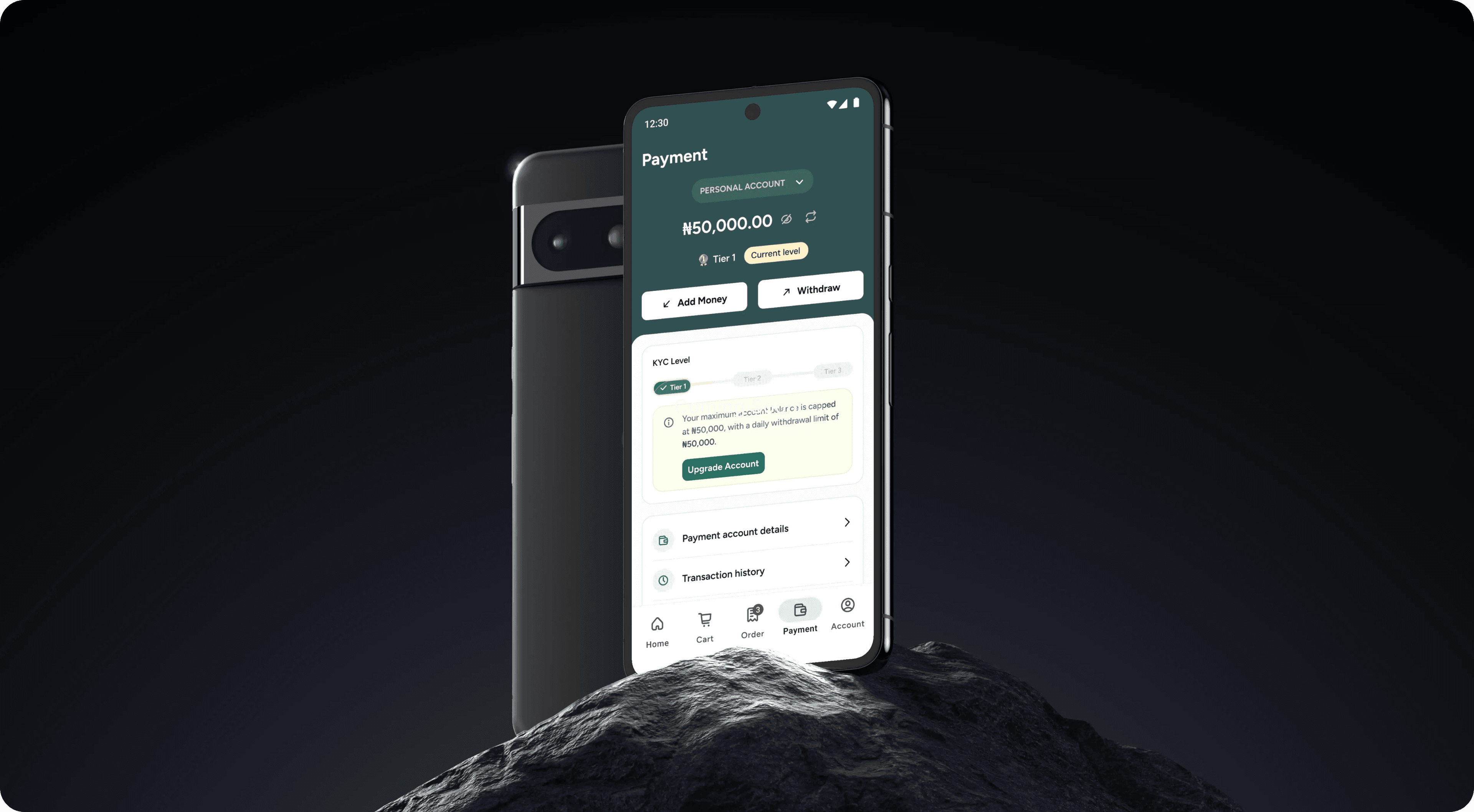
An Opportunity to Bridge Financial Gaps
Sabi Market is an FMCG-focused eCommerce platform serving manufacturers, wholesalers (sellers), and retailers (buyers). While the platform offered digital ordering and payments through cards, USSD, and bank transfers, we faced increasing friction as user volume and order complexity grew.
Our legacy payment integrations were breaking under the weight of regulatory limits, refund challenges, and manual reconciliation efforts. Sellers weren't being paid fast enough. Buyers were struggling with payment failures and refund bottlenecks. The opportunity: build a secure, flexible, and scalable Wallet (Payment Account) system that works for both sides of the marketplace.
Financial Exclusion in a Growing Market
The existing payment landscape presented multifaceted challenges that demanded comprehensive solutions:
- 1
Refund failure & regulatory limits — CBN-imposed transaction limits made it hard to process high-value FMCG orders. Failed deliveries led to difficult refunds, straining support teams and customer trust.
- 2
Manual seller reconciliation — As sellers grew, our manual payout process became chaotic — tracking successful deliveries and disbursing funds created operational lag and errors.
- 3
Fragmented payment experience — Buyers had multiple payment options, but none of them supported order splitting, payment visibility, or escrow logic that guarantees fairness for sellers.
Challenge: Design a reliable, intuitive Wallet system for both buyers and sellers to power large transactions, ensure easy refunds, and unlock scalable seller reconciliation — all while navigating identity verification (KYC) in a region with both formal and informal businesses.
Research: Financial Fragmentation
Our platform data told a clear story before we ever ran a single interview: 70% of retailers on Sabi Market didn't have registered businesses, and manual reconciliation was consuming roughly 3 hours a day of internal team time — both figures pulled directly from platform registration and operations data, not survey estimates.
We supplemented that with smaller, informal in-field conversations and observations across three groups:
- 1
Retailers in informal markets — who prefer USSD and cash but are open to Wallets if refunds are easy and secure
- 2
Wholesalers & distributors — who manage hundreds of SKUs and demand transparency on when and how they'll be paid
- 3
Internal teams — who described firsthand how much support effort went into refunds, payout errors, and payment delays
The platform data did the heavy lifting in sizing the problem; the field conversations gave us the qualitative texture — why retailers hesitated, what "fair" reconciliation actually looked like to a wholesaler, where our own support team was absorbing the cost of a broken process.
In short: Sabi was growing fast, but payments and refunds weren't keeping up with that growth.
Painpoints
As our marketplace expanded, users encountered increasingly complex challenges with the existing payment infrastructure that demanded immediate attention:
- 70% of retailers don't have registered businesses
- Sellers want real-time access to pending balances
- Buyers want refund assurance when items go undelivered
- Manual reconciliation takes ~3 hours/day
Patching Things Up
To address these core challenges without compromising regulatory compliance, we needed to architect a comprehensive system that would:
- Break down verification into manageable, user-friendly steps
- Show escrowed balances & when funds become available
- Make wallet refunds instant & automatic
- Automate payout logic tied to delivery status
Design Principles
- 1
Trust through clarity — Let users clearly see balances, limits, and refund statuses
- 2
One wallet, many possibilities — Seamless use across checkout, refunds, and withdrawals
- 3
Tiered simplicity — Support formal and informal users without breaking the flow
The Wallet Experience: Sabi Payment System
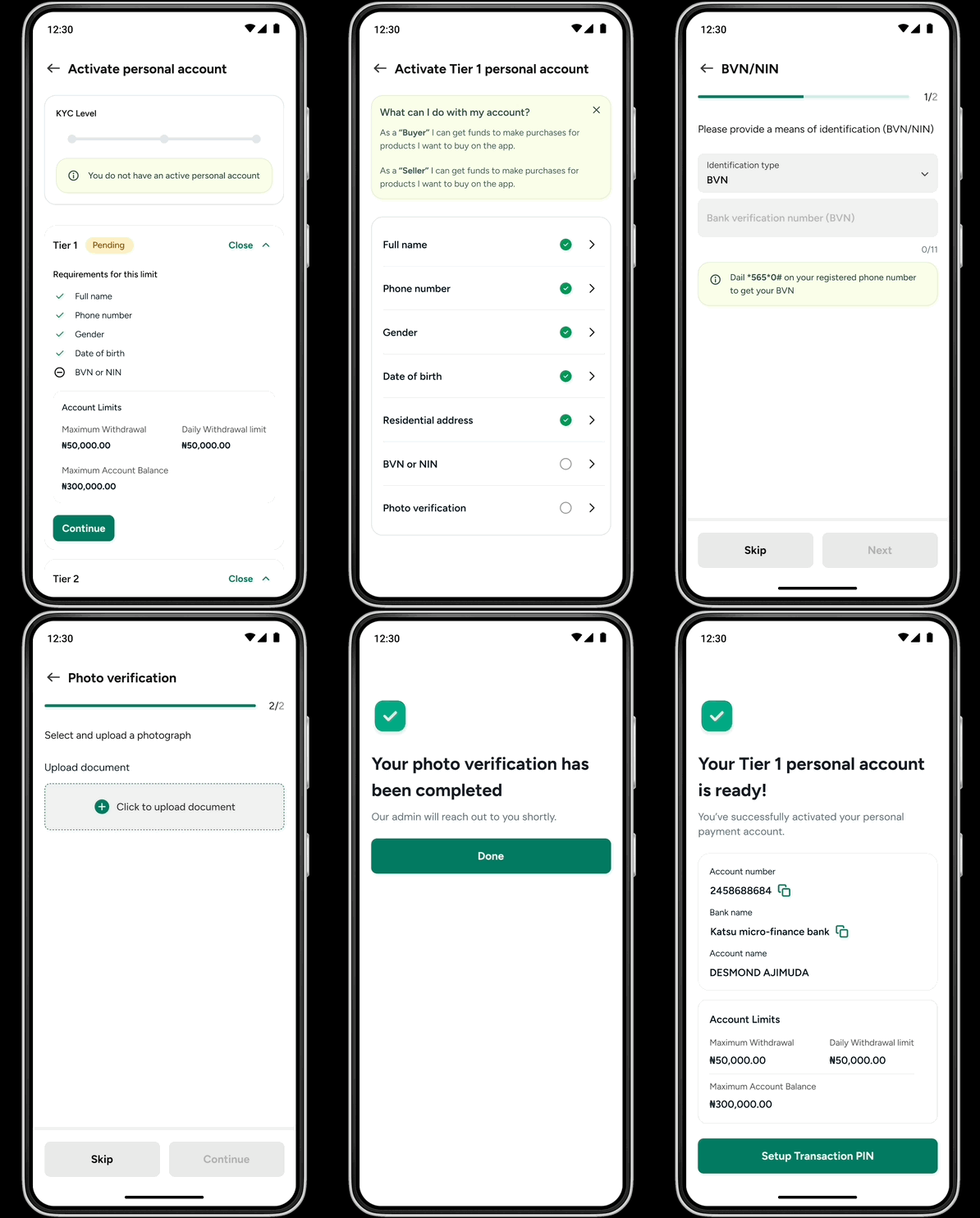
Progressive Verification Framework
Rather than presenting verification as an overwhelming, monolithic hurdle, we strategically broke the process into discrete, manageable steps that users could navigate with confidence:
- 01Basic identity verification seamlessly collected during initial onboarding
- 02BVN/NIN verification enhanced with built-in lookup assistance for user convenience
- 03Photo verification utilizing advanced liveness detection technology
- 04Additional documentation requirements based on specific account tier progression
Tiered Account Structure
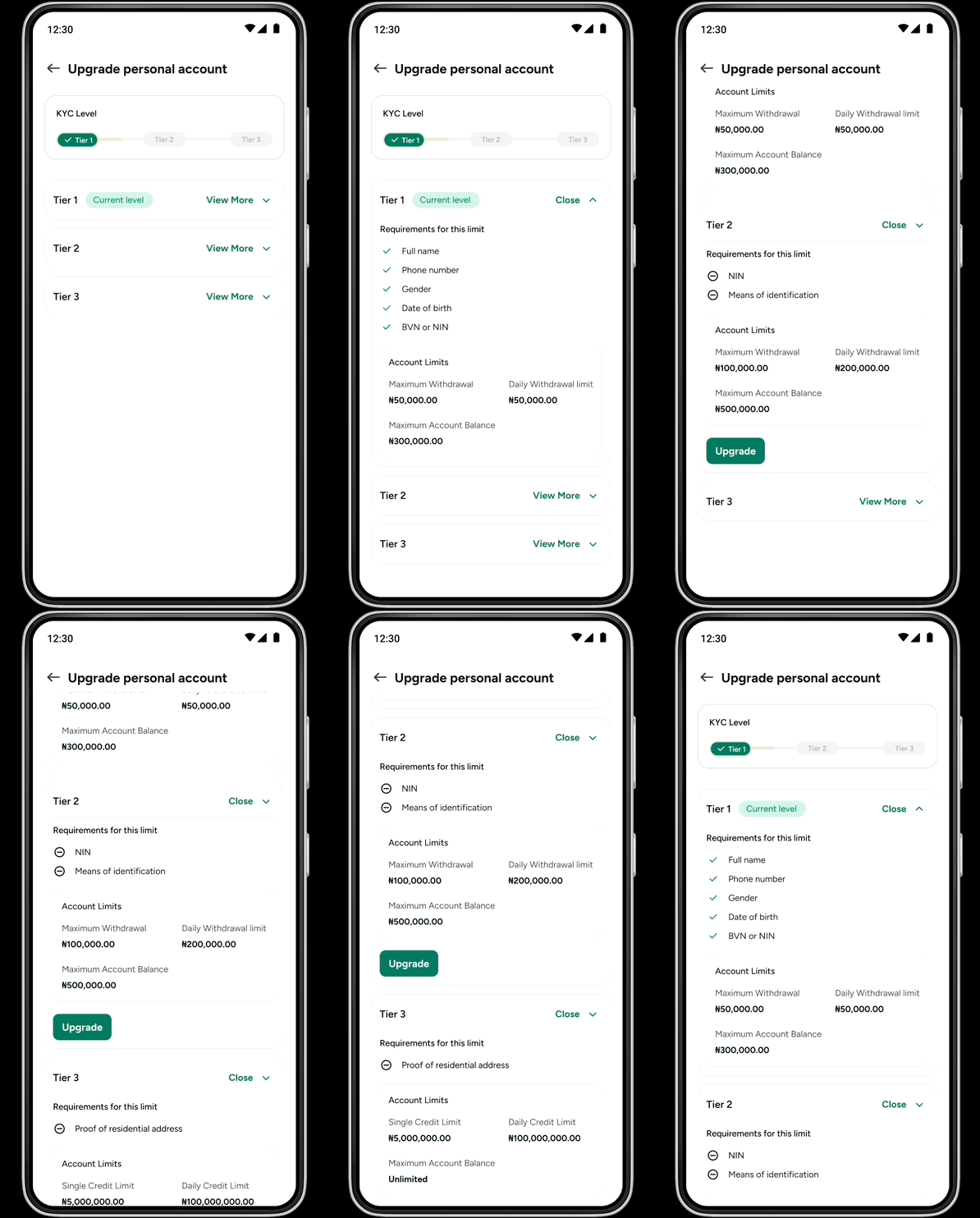
We implemented three progressive tiers, aligned to CBN's standardized KYC framework rather than limits we set ourselves:
- 01Tier 1: ₦50,000 — essential basic transfers and standard payments
- 02Tier 2: ₦200,000+ — advanced recurring payments and partial refund capabilities
- 03Tier 3: ₦1,000,000+ — premium credit facilities and bulk payment processing
Our design contribution here was in how we communicated tier progression and its benefits to users — not the thresholds themselves, which are set by regulation. We focused on making the path from Tier 1 to Tier 3 feel like a clear set of incentives rather than a compliance obstacle course.
Core Account Functionality
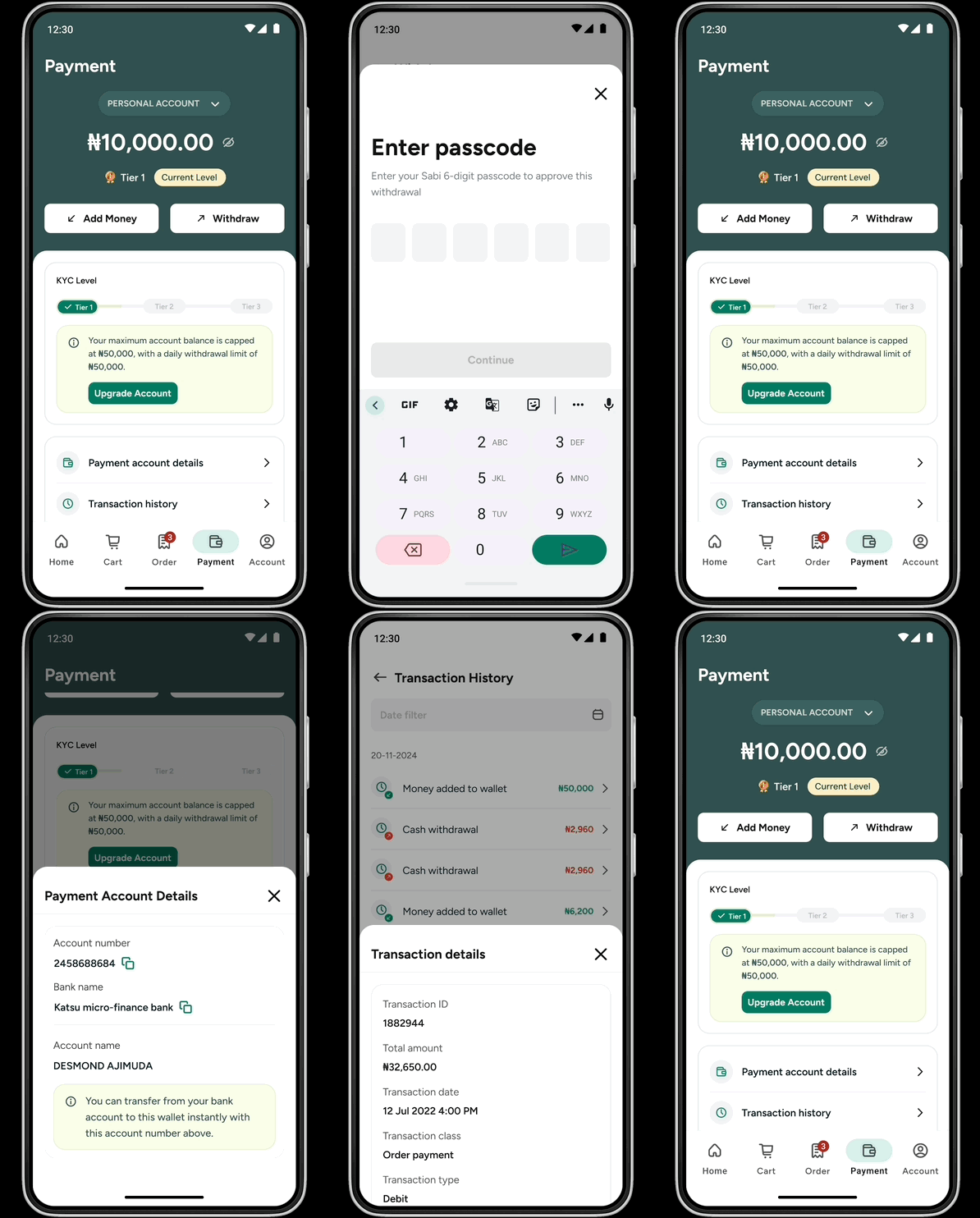
We prioritized six essential features based on user needs and observed financial behaviors:
- 1
Account Dashboard — Comprehensive balance overview with intuitive quick actions
- 2
Transaction History — Advanced searchable, filterable record of all account activities
- 3
Withdrawal Account Setup — Streamlined process to link external accounts for seamless funds transfer
- 4
Transaction PIN — Enhanced multi-layer security for payment authorization and fraud prevention
- 5
Add Money — Multiple convenient funding options including bank transfer, QR code scanning, and more
- 6
Withdraw Money — Efficient, transparent process for moving funds out of the ecosystem when needed
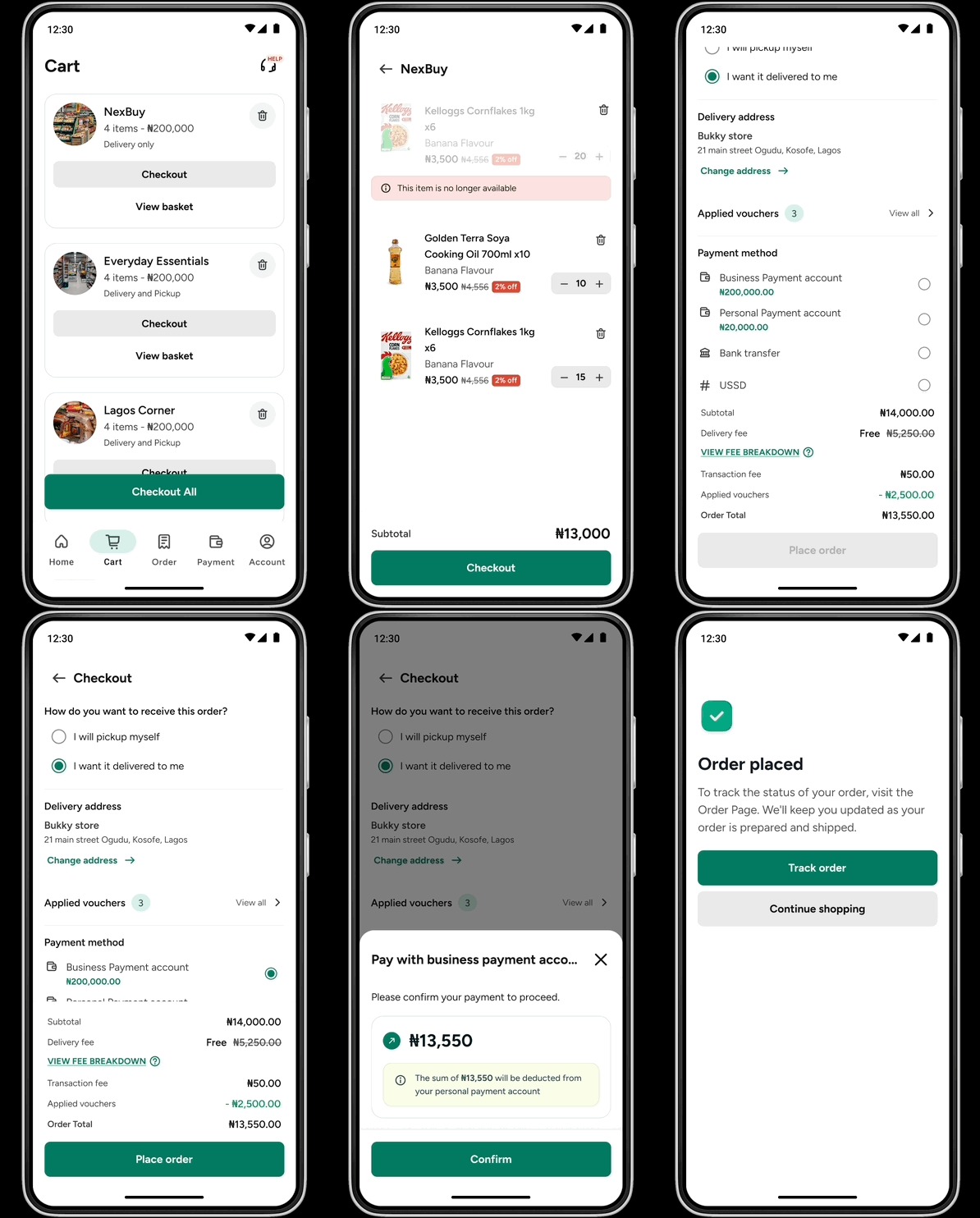
Checkout Integration
We integrated payment accounts directly into the existing checkout experience to minimize friction:
- Payment method selection prominently includes Sabi payment account options
- One-click payment functionality directly from available account balance
- Intelligent routing between personal and business accounts based on transaction context and user behavior
- Comprehensive fallback options when account balance is insufficient for transaction completion
Where Things Stand
This system is pre-launch. We don't have live adoption or reconciliation-time data to report yet, and I want to be upfront about that rather than imply results we haven't measured.
The next step is putting the system in front of the people it's built for: usability testing sessions with Sabi Market's actual customers, from micro-retailers in local markets to large-scale distributors. We'll observe how real users navigate payment tasks, uncover friction points, and validate whether the progressive verification flow and tiered structure actually reduce the friction they were designed to solve.
Given that our starting problem was backed by hard platform data (the 70% unregistered-business figure, the 3-hours-a-day reconciliation cost), the clearest measure of success once live will be whether those same numbers move — fewer manual reconciliation hours, faster time-to-payout for sellers, and a measurable drop in refund-related support tickets.