Merit Circle Staking V2
Helping Web 3.0 enthusiasts earn rewards through crypto staking
Role
Discovery, Visual & Product Design, UX Research
Team
Bolu Obisanya, Product Designer — Archie Hicklin, Product Designer — working with Merit Circle's Engineering and Product teams
Year
2022
Charting a Fresh Course for Merit Circle Staking
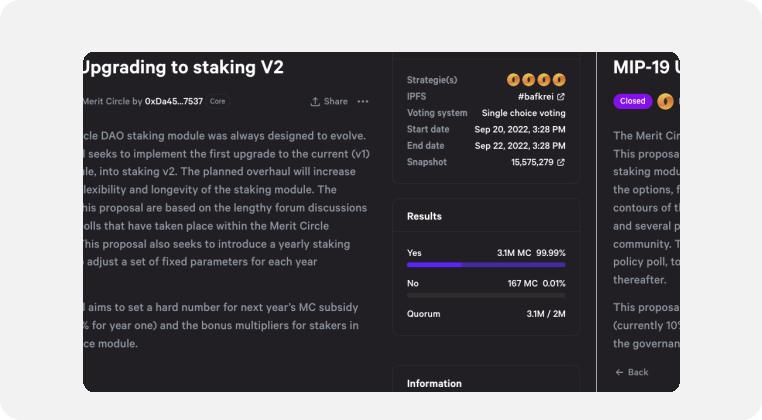
Merit Circle as a DAO ensures that every member of the community has a voice and a say in the governance of the DAO. So for any decision to be made, proposals are put forward, and votes are cast. This process ensures transparency and a democratic decision-making process, which helps to validate the needs of the members of the DAO.
(Community voting process screenshot — MIP-19)
Planning the Project's Lifecycle
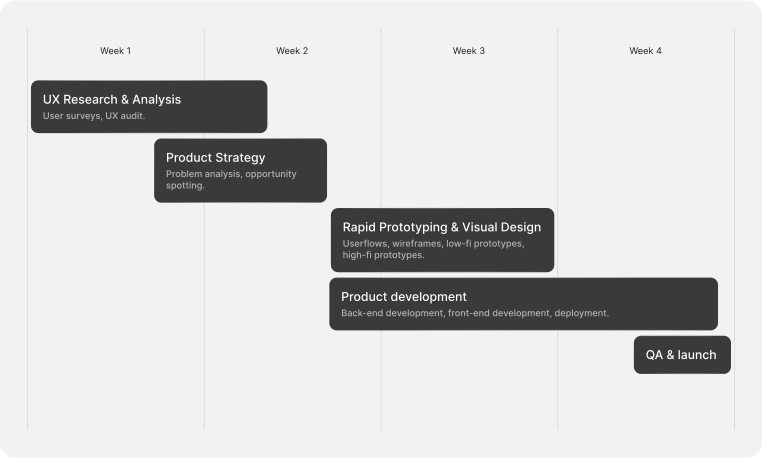
We had four weeks total to take this project from research through to launch. Of that, roughly three weeks were dedicated specifically to research, strategy, and design — rapid prototyping and visual design overlapping toward the end of that window — with the remaining time for development and QA before shipping.
(Project timeline: Week 1 → UX Research & Analysis; Week 2 → Product Strategy; Week 3 → Rapid Prototyping & Visual Design; Week 4 → Product Development → QA & Launch)
Research Insight: Taking in Feedback from the Community
The initial approach was to conduct discussion-based surveys to gain insight into how DAO members were interacting with and experiencing the current staking platform, paired with quantitative analysis of staking behavior across the community.
As a team, we came in with assumptions about what needed to change. The research existed specifically to test those assumptions against what active DAO members actually needed, rather than assuming our internal read on the problem was correct. That process surfaced five clear gaps:
- 1
Lack of Diverse Staking Options — The current staking model was limited, with little room for different preferences within the community.
- 2
Undefined Locking Periods — The duration for which staking rewards were locked wasn't clearly defined or optimized, affecting user engagement and commitment.
- 3
Unexplored Pool Strategies — There was a need to explore new strategies for staking pools, including single-sided staking or different LP pairings.
- 4
Subsidy and Revenue Distribution Uncertainty — The balance between fixed and variable subsidies, and how DAO revenue flowed back to stakers, was unclear.
- 5
Uncertain Long-Term Liquidity Strategy — Mechanisms for establishing and maintaining long-term protocol-owned liquidity needed real attention.
Beyond the research itself, the strongest form of validation came later, through Merit Circle's own governance process: the redesigned staking model was put to the DAO as a formal proposal (MIP-19) and passed by community vote — meaning the direction wasn't just internally approved, it was ratified by the people who'd actually be using it.
Goals: Optimize Staking Platform for Diverse Participation and Sustainable Growth
From the research, we got a clearer picture of what needed to change. Most of it centered on how the staking platform operated day to day — the current model wasn't bad, but it wasn't great either.
- 1
MC/ETH LP Pairing Asset — chosen as the main liquidity staking pool to receive part of the DAO's staking rewards
- 2
Locking Periods — Uniswap v2 was chosen as the preferred platform for liquidity pool staking
- 3
Pool Strategies — the maximum lock period for the $MC/ETH and $MC pools was set to 48 months
- 4
Long-Term Liquidity Strategy — the current interface needed work and had to be cohesive with Merit Circle's visual identity
UX Audit: Taking Stock of Issues Through Familiar Frameworks
I undertook a heuristic analysis of the existing platform to uncover UX issues affecting our community members.
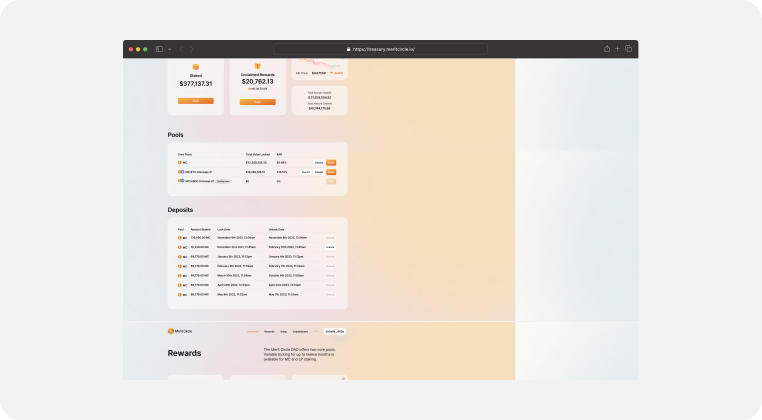
(Old design screenshot)
Heuristics Not Followed
- 1
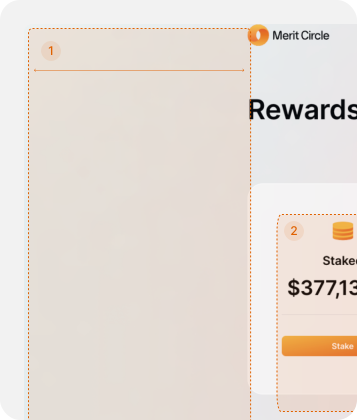
Too Much White Space — whitespace is good in principle, but here it went past efficient and into wasted space
- 2
No Help or Documentation — zero guidance for newer users trying to understand more complex terminology
- 3
Little Visibility of System Status — minimal feedback on what was actually happening within the system
- 4
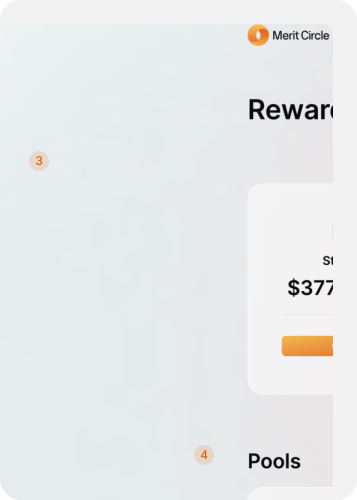
Complex and Decorative Design — heavy background gradients made the interface feel distracting rather than clear
Lack of Consistency and Standards
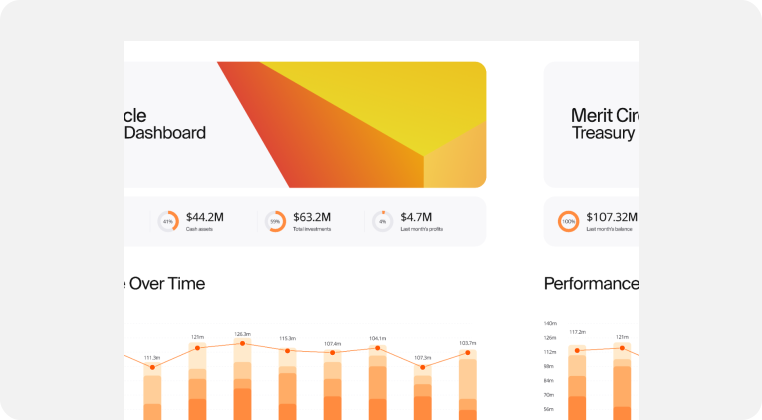
Prior to working on the staking platform, I'd already started redefining the overall visual language across Merit Circle's products. Staking was next on the list — Treasury Dashboard had already been brought in line with the new visual identity, while Staking hadn't.
(Treasury Dashboard — aligned; old Staking UI — not yet aligned)
Pushing Through the Rubble
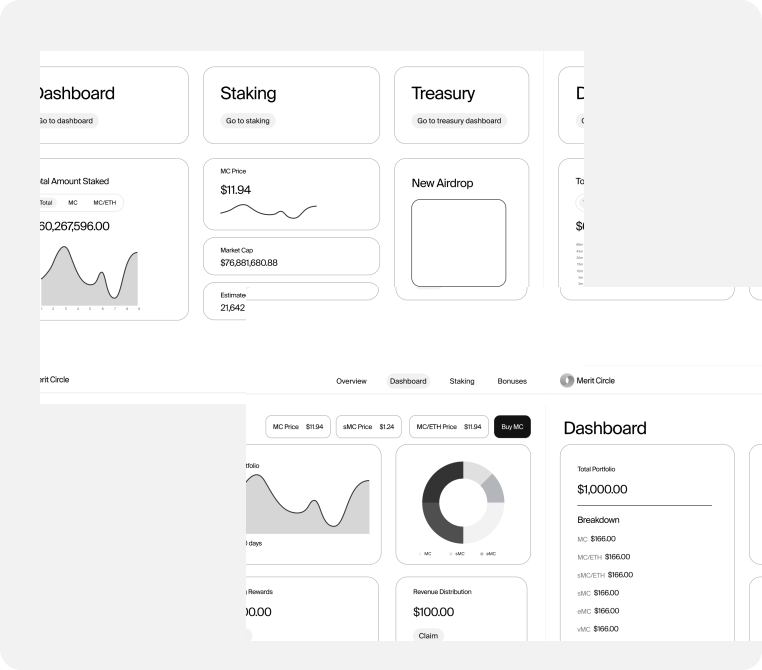
We mapped user flow and information architecture, then moved into wireframes — iterating through multiple options for every page and component before settling on a direction grounded in the heuristic findings above. For example, we deliberately surfaced pool APY and lock-period options directly on the Staking page rather than behind a secondary click, as a direct fix for the "little visibility of system status" issue the audit had flagged.
(User flow, wireframes)
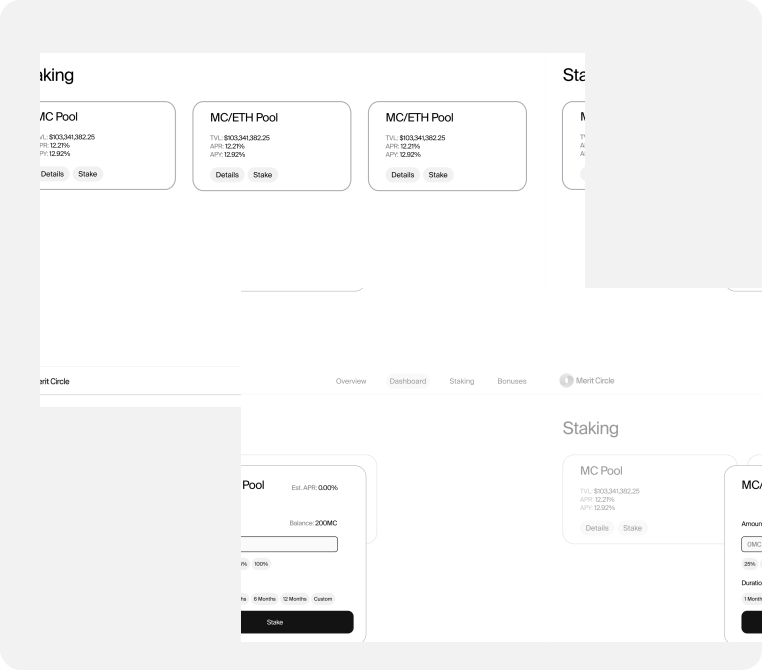
What Didn't Work
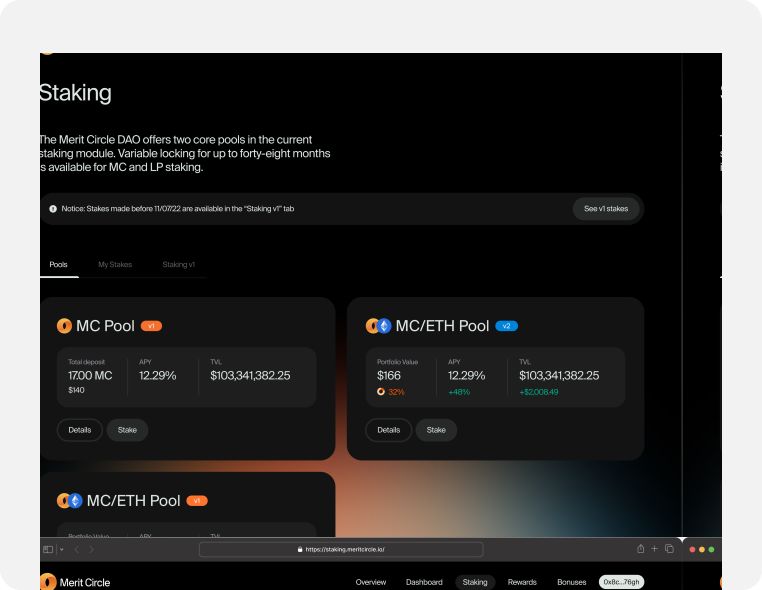
Staking Update
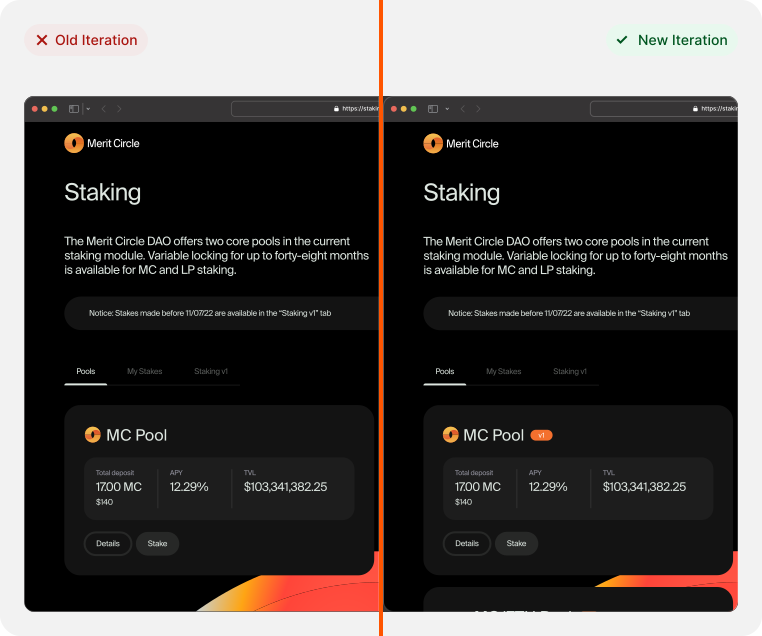
Migrating from v1 to v2 on a platform that handles real staked funds meant transparency wasn't optional. We initially planned to keep v1 and v2 pools together on the platform without a hard visual split. Community members raised a specific, concrete concern: it was genuinely unclear which pool their existing stake belonged to, and whether migrating would affect their locked reward terms. Given that ambiguity touched real money, we treated it as a trust risk rather than a minor UI inconsistency, and split the pools with explicit v1/v2 labeling as a result.
(Old iteration vs. new iteration — Staking page comparison)
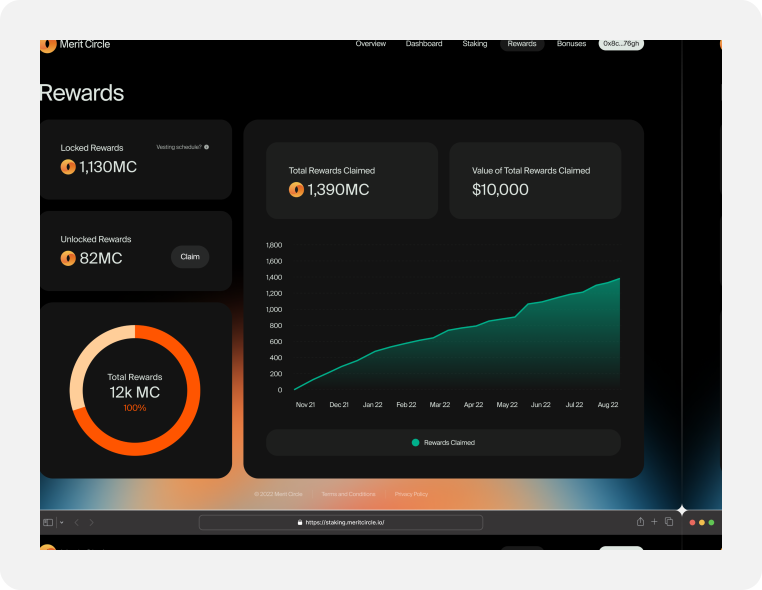
Vesting Was Changed to "Rewards"
The initial vesting design presented a long list of vestable MC tokens available for withdrawal — but it lacked any real overview, gave users no clear sense of progress, and required manually withdrawing tokens one at a time even when multiple were available.
We reassessed the entire concept and replaced it with a single button to claim all vestable tokens, alongside clear information on locked and unlocked rewards — what eventually became the Rewards page shown below.
Moving Parts: A New Way to Manage Your Staking Portfolio
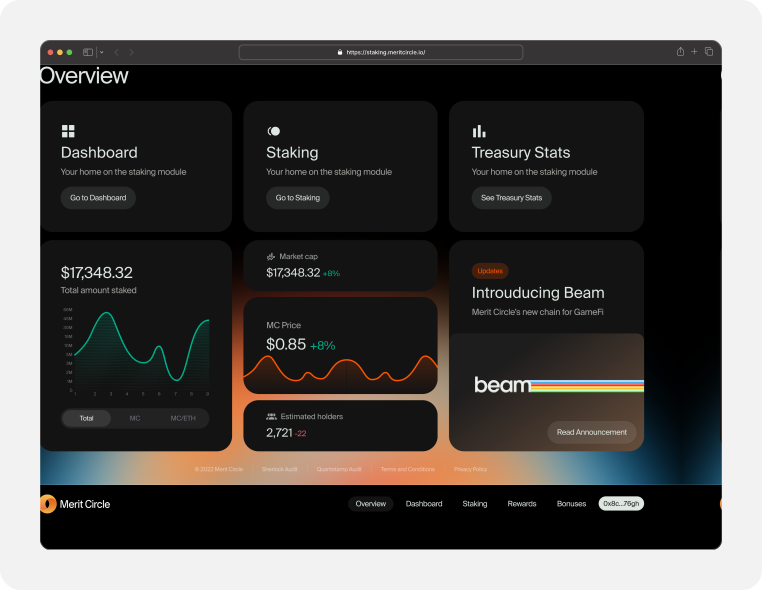
Overview
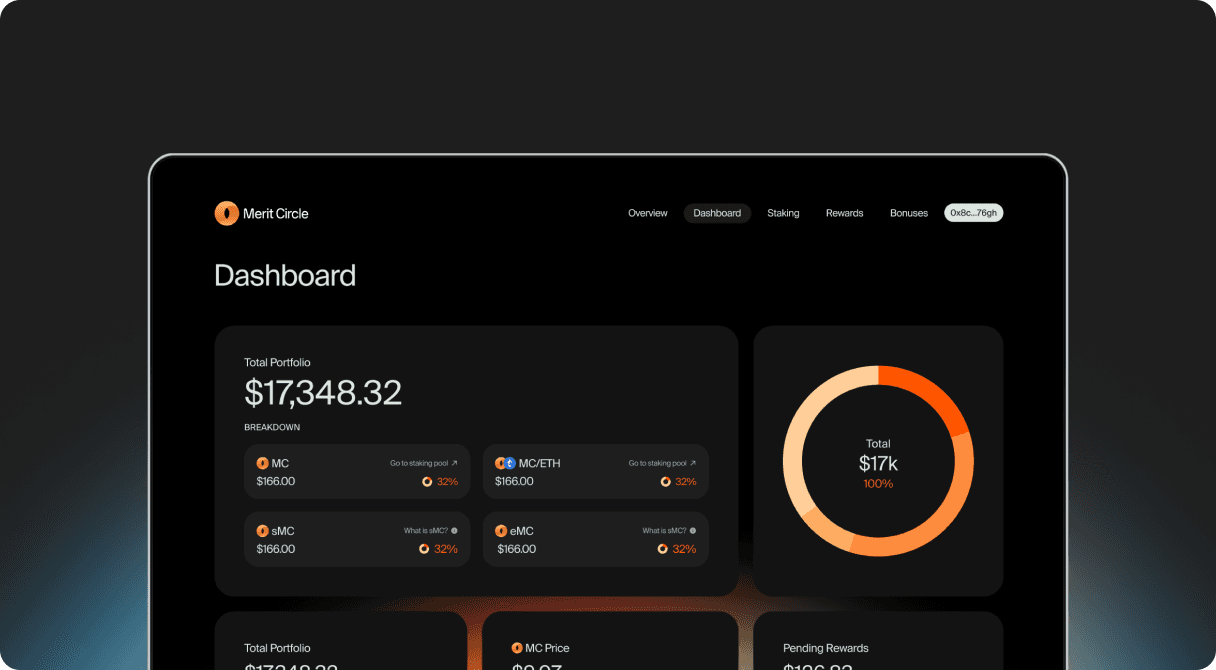
A central hub giving users a single view of system activity, upcoming events, and community updates — keeping them connected to what's happening across Merit Circle.
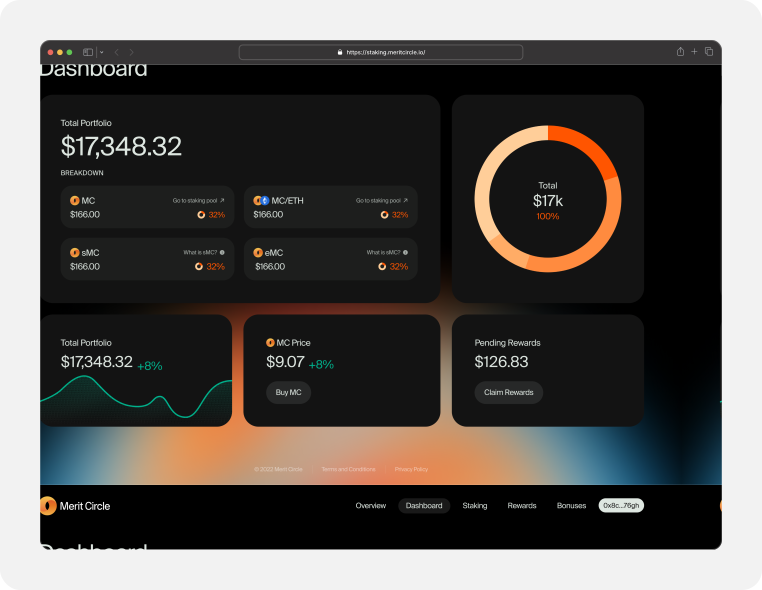
Dashboard
A control center for a user's full portfolio — staked amounts, rewards available for withdrawal, and interactive visualization tools to support planning and financial decisions.
Staking
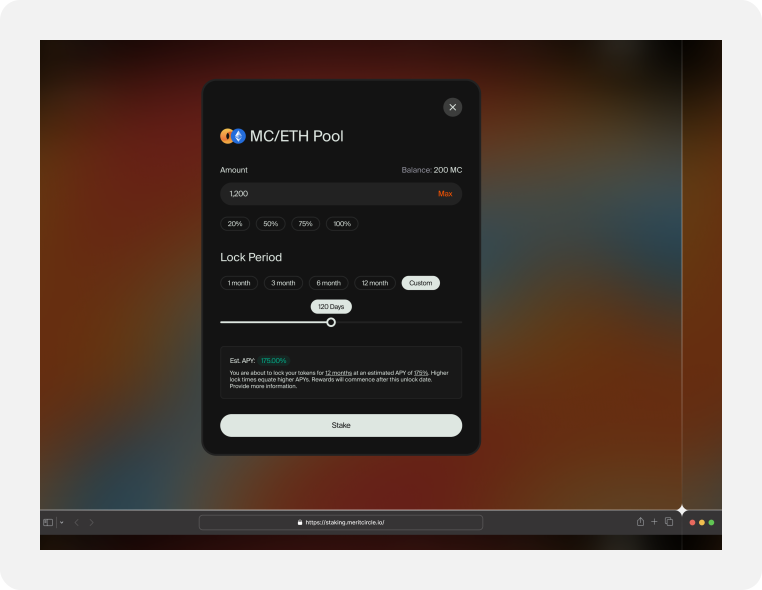
Users can evaluate every available pool — APY, lock periods, and terms — side by side, with secure real-time updates that let them participate with confidence.
Rewards
The redesigned home for tracking locked, unlocked, and claimed rewards, with a single claim action and a graphical view of reward history — the direct outcome of the vesting-to-rewards rework described above.
Retrospective: Adapting to Change in the Startup Environment
We had four weeks to take this from research to launch, and about three of those weeks were spent in research, strategy, and design before development and QA closed things out.
As the team worked through the design, new information about the platform kept surfacing, requiring real changes to constantly evolving requirements. Despite the short timeframe, we stayed focused on building something that would genuinely serve the DAO's members — working long hours and adjusting the design where it mattered, rather than shipping something we knew had gaps.
In the end, we shipped a staking platform that was both usable and functional, on a timeline that didn't leave much room for error. We learned that limited time and shifting requirements don't have to mean a worse outcome — with the right process (heuristic grounding, real community feedback, and a willingness to reverse course when something wasn't working) it's possible to move fast without cutting corners on trust, especially on a platform handling people's actual staked funds.
Outcomes
It's worth being precise here rather than rounding up. As of March 30, 2023 (roughly the first year since launch):
- 230,000 all-time page views
- 60,000 all-time site visitors — this reflects traffic, not a confirmed count of active stakers, and I want to be upfront about that distinction rather than imply every visitor staked
- Total value locked (TVL) peaked at over $100 million, with TVL sitting around $60 million at the time of this measurement
Worth noting directly: 2022 was a difficult year across crypto and DeFi broadly, including major downturns and protocol failures well beyond Merit Circle. Against that backdrop, sustained TVL in the tens of millions and consistent site traffic reflect real, ongoing community engagement with the redesigned platform — even if it's hard to cleanly separate how much of that resilience came from this redesign specifically versus the underlying strength of the Merit Circle community and token itself.